
Michigan primary roundup: Results, reactions and analysis

Veteran Ben Ambrose narrowly wins 2nd District Democratic primary

Veteran and former federal worker Ben Ambrose secured the Democratic nomination in Michigan’s 2nd Congressional District Primary Wednesday afternoon.
The Associated Press called the race for Ambrose at 4:36 p.m. with 44.3 percentage points to Ambrose.
"I am deeply honored and humbled to have earned the Democratic nomination," Ambrose wrote in a statement. "To every voter who placed their trust in me, thank you. This victory belongs to the record number of thousands of people across our district who believe it’s time for a new generation of leadership rooted in service, integrity and putting people before politics."
Ambrose narrowly beat his primary opponent Jamie Hill, a physician assistant and former paramedic, by two percentage points (42.3%). Clyde Welford, a teacher and commissioner in Lake County, garnered 13.4% of the vote.
Candidate who suspended campaign defeats Trump pick in Michigan primary

Michigan's 8th Congressional District GOP nominee, Thomas Smith managed to win the primary race, despite the decision to suspend his campaign weeks earlier.
Smith defeated Trump-backed challenger Amir Hassan by roughly 10,000 votes, or 17 percentage points, out of over 61,000 votes cast, according to the Associated Press.
On July 16, Smith wrote in a statement that he would be suspending his campaign "after prayerful consideration," and threw his support to Al Lemmo, another GOP candidate running in the primary.
"Al is a champion for conservative principles and is the right choice for Republicans in August," Smith said. "I ask every one of my supporters to join me in uniting behind Lemmo for Congress."
In June, Trump endorsed Hassan in a truth social post, citing his military experience in the Navy and work in law enforcement.
"As your next Congressman, Amir will work hard to Grow the Economy, Cut Taxes and Regulations, Promote MADE IN THE U.S.A., Champion American Energy DOMINANCE, Keep our Border SECURE, Stop Migrant Crime, Strengthen our Great Military/Veterans, and Defend our always under siege Second Amendment," Trump's post reads.
AP says Thomas Smith beats Trump-backed Amir Hassan in U.S. House Primary
A major upset has happened in mid-Michigan primary race.
Republican Thomas Smith suspended his campaign on July 16th and endorsed one of his competitors.
But Smith is has won according to the Associated Press.
According to the latest numbers from the AP, Smith is leading by over 10,000 votes with 99% of precincts reporting in Michigan 8th Congressional District, which includes the Tri-Cities and Flint.
Smith beat Navy Veteran Amir Hassan who was backed by President Trump earlier this year.
AP calls U.S Senate race for El-Sayed
Progressive Abdul El-Sayed has declared victory in the hotly contested Democratic nomination for Michigan's U.S. Senate against Congresswoman Haley Stevens.
The Associated Press has declared him the winner as of this morning.
The latest numbers show El-Sayed leading by less than 15,000 votes with 99% of precincts reporting.
Haley Stevens has conceded. In a statement, she congratulated and endorsed El-Sayed. “We must elect Democrats up and down the ballot," she said.
El-Sayed declares victory in Democratic Primary for U.S. Senate; AP still hasn't called the race


Health official Abdul El-Sayed has declared victory in the Democratic primary for U.S. Senate. The Associated press has not yet made a race call.
"Dr. Abdul El-Sayed won the Democratic nomination for Michigan’s United States Senate seat, prevailing in the most expensive Senate primary in American history," read a press release from his campaign.
In a speech to supporters in Detroit this morning, El-Sayed, who has a slim lead, took aim at Republican Mike Rogers – who awaits the winning candidate in the general.
“And so, Mike, and I know you're listening, Mike. We are coming for you,” he said.
The progressive has focused his campaign on issues like Medicare for All and abolishing ICE.
"We live in an era of historical inequality. In an era where union participation is near an all-time low, but the number of billionaires has never been higher," he said.
In a speech in the early hours after midnight, his opponent, Congresswoman Haley Stevens, focused on beating Rogers in November.
“Republicans are going to do everything they can to throw all the dirt, all the mud, the kitchen sink at us because they want to keep the U.S. Senate red,” she has not yet conceded.
El-Sayed was endorsed by state Senator Mallory McMorrow who dropped out of this race before election day. McMorrow backed El-Sayed shortly after NBC called the race for him.
"Whatever differences there were between the candidates in this race, those differences are nothing compared to the contrast in November," she said in a statement.
Rogers said in a statement from July satirically that he "endorsed" both candidates, El-Sayed or Stevens, saying he would beat either of them.
"We must end the Democrats’ decades-long monopoly over our two Senate seats," Rogers said.
John James wins Republican nomination for Michigan governor, will face Democrat Jocelyn Benson

Congressman John James picked up roughly half the votes in Tuesday’s Republican primary for governor.
He’ll face off against Secretary of State Jocelyn Benson, who won the Democratic primary, in November’s general election.
Speaking to supporters in Sterling Heights, James slammed Benson for her role in state government during the past eight years.
“Jocelyn Benson promises a new direction, but she’s been a part of the leadership that got us lost in the first place,” James told attendees at his victory party.
John James acknowledged President Donald Trump in his speech. The president’s endorsement gave the James campaign a significant boost, even convincing two other candidates to withdraw from the race.
But before he turns his attention fully on the November election, James must now rally support among Republicans who didn’t vote for him.
Businessman Perry Johnson picked up about a third of the GOP vote in the primary. For months, Johnson’s campaign repeatedly attacked James, calling him a “Lying Liberal Loser.”
After James declared victory, Johnson released a written statement that does not appear to be a political olive branch: “The career politicians and special interests may win tonight, but they will not win the future. We will make Michigan great again!”
The winner of November’s general election will succeed Governor Gretchen Whitmer, who is term-limited.
Bergman and Barr win, setting up rematch

Attorney Callie Barr secured the Democratic nomination for the second time in a row.
At a campaign event last night in downtown Traverse City, Barr supporters anxiously refreshed poll results on their phones, until Barr’s win was called, just before 11 p.m.
Later, Barr highlighted her campaign’s message on affordability.
“We have the greatest income inequality that we’ve had in over 100 years, right? We see that in the cost of gas and groceries, healthcare that folks have been priced out of. And so this is really a fight to matter for the next 100 to 200 years.”
In November, Barr will face incumbent Republican Jack Bergman, a rematch of their 2024 contest, where Barr was defeated by over 20 points. Bergman easily won the Republican nomination over two challengers in Justin Michal and Matthew DenOtter.
“I’m incredibly grateful to the Bergman Brigade and the thousands of voters across Northern Michigan and the Upper Peninsula who once again placed their trust in me," Bergman said in a statement.
Jocelyn Benson wins Democratic primary for governor's race

Michigan Secretary of State Jocelyn Benson clinched the Democratic nomination for governor Tuesday night as she seeks to succeed the current Democrat holding the office, Governor Gretchen Whitmer.
The race was called by multiple media outlets not long after the polls closed.
Benson told a crowd in Detroit that she wants to grow the economy, improve schools, and make housing more affordable. She also said the election is about protecting the values of democracy.
“You all know that I will work with anyone and everyone to get that done,” she said. “But I am also unafraid to stand up to anyone who gets in our way, and this moment needs leaders who will stand up with courage, unafraid, to bullies.”
“I will work for all of you and every Michigander in this state. Not the highest bidder, not corporate interests, not Donald Trump – you,” she said to the cheers of the crowd.
Benson is attempting the rarely achieved feat in Michigan of succeeding a retiring governor of the same party – which has not happened since the state constitution of 1963 established four-year gubernatorial terms.
Benson faced just a token challenge from Genesee County Sheriff Chris Swanson in the primary, which allowed her to save resources for the general election. Her campaign announced this week it has already booked a $10 million ad buy heading into the general election.
Michiganders tell WCMU who they voted for and why
Mount Pleasant resident Noah Lapp spent nine years in Iraq as a teacher. He was recently evacuated from Iraq due to the ongoing conflict in the Middle East.
Lapp says he vote for Abdul El-Sayed for U.S. Senate because of his approach to foreign policy.
“It's very easy when it's on the news to kind of ignore it,” Lapp said. “When it's your neighbors getting their houses bombed, you start to kind of change the way you feel about the way we're dealing with that whole region.”
El-Sayed is running in a contentious primary against Rep. Haley Stevens (D–Birmingham). El-Sayed's campaign has focused on progressivism, while Stevens is considered the more moderate candidate.
Meanwhile, the gubernatorial race has seen a similarly bruising primary on the Republican side. Businessman Perry Johnson is running against Congressman John James, who is endorsed by President Donald Trump.
Babette Vena described herself as an independent voter and lives in Lee Township. Vena spoke to WCMU at a recent meet-and-greet for Johnson. She is supporting Johnson and says she won’t vote for James if he wins the primary.
“I believe what he says is what he's going to do. He's much more aligned to President Trump," she said of Johnson, who is trying to establish himself as the grassroots candidate. "He's a businessman, so he can get rid of all the politicking that goes on.”
The winner will likely face Secretary of State Jocelyn Benson who is considered the front runner on the Democratic ticket for governor. She is running against Genesse County Sheriff Chris Swanson.
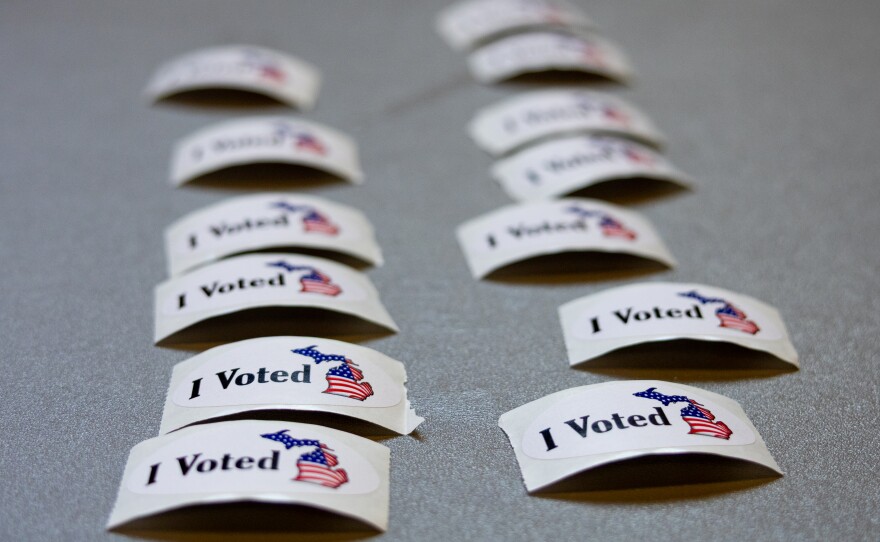
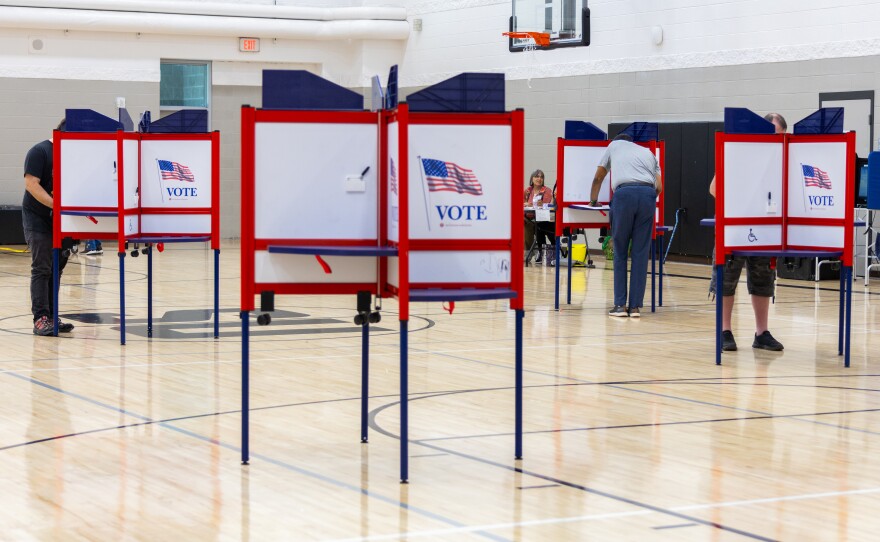
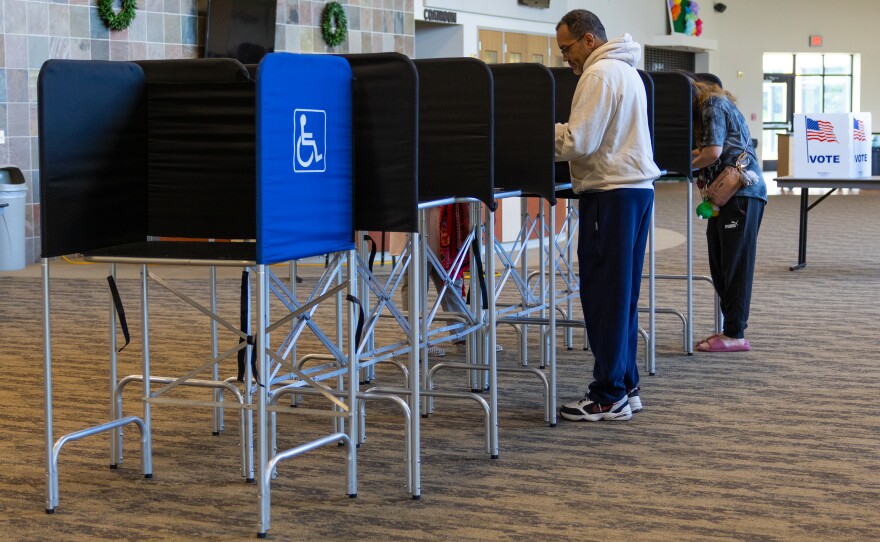
Photos: Saginaw hits the primary polls
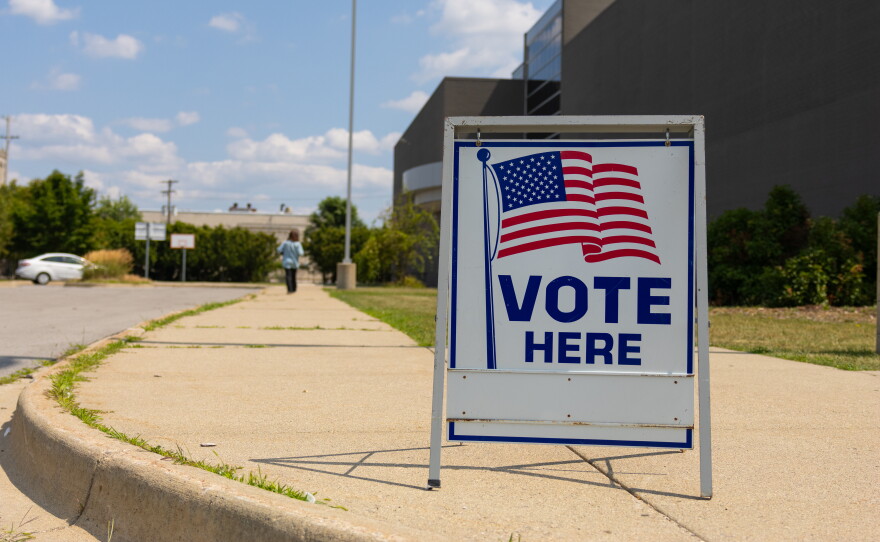
Voters across the city of Saginaw and Saginaw Township hit the polls to cast their ballots in the Aug. 4, 2026 primary elections.





Here’s when to expect results in Michigan’s primary election

With primary races for the U.S. Senate, governor, and more going down to the wire, everyone is going to be watching Michigan on Tuesday.
But it might take a while to know the actual winners, particularly in close races.
Michigan counts its ballots as fast or faster than a lot of other swing states. And the state has done a lot in recent years to count even faster — for instance, by allowing people to vote early in person and letting election officials process absentee ballots before Election Day.
Slowdowns in reporting election results can give rise to unfounded speculation about improprieties in the count. Taking time to release results, though, isn’t a sign that anything is wrong — it’s a byproduct of the fact that running elections is complicated and involves many steps, which often take time to get right.
Here’s what to know about when to expect results from Michigan’s primary election.
Senate primary is one of the most expensive ever
Progressive candidates across the country have been upsetting Democratic centrist incumbents in deep blue strongholds like New York City, Philadelphia and Colorado. Many political analysts say there’s a battle happening for control of the party’s future.
Michigan’s Democratic Senate primary pits establishment-backed Congresswoman Haley Stevens versus the more progressive former public health official Abdul El-Sayed.
Stevens said she isn’t worried about what pundits are saying and is focused on issues like affordability.
“I squarely believe that this is a Michigan moment," Stevens said. "What our state is going through right now needs to be heard, and it needs to be understood.”
Speaking to reporters in Detroit Monday night, El-Sayed echoed that sentiment.
“I'll be honest with you. I just don't spend as much time thinking about the future of the Democratic Party," he said. "I'm interested in the future of Michiganders and Michigan voters.”
There has been a rift between the more progressive El-Sayed and the establishment-backed Stevens, but El-Sayed said the focus will change on Aug. 5th.
“The goal now is not to dunk on anybody," El-Sayed said. "The goal now is to come together so we can all collectively dunk on Mike Rogers.”
Republican Mike Rogers did not have to go through a primary, after being endorsed by President Trump.
Stevens says the Democratic Party will come together no matter who wins the primary.
“We're going to be able to band together no matter what happens and beat Mike Rogers," Stevens said. "No one's talked about this guy. I don't even think I've seen him. He's been a bump on the log.”
The race is one of the most expensive senate primaries ever, with more than $60 million being spent on advertising and mailers, according to the Federal Election Commission.
Courtesy of WDET
DOJ monitoring multiple polling locations
Federal election monitors are watching primary voting take place in four Michigan cities on primary day.
The U.S. Department of Justice sent them to polls in Lansing, East Lansing, Detroit and Hamtramck.
Michigan Department of Attorney General spokesperson Kimberly Bush says things are going smoothly with the guests.
"They’ve been cordial, they’ve been friendly, there have been no real issues to report, which is what we expected, we expected them to be observing to be just witnessing the normal process as they have in previous elections when they’ve been here," Bush said.
The DOJ’s Civil Rights Division sent monitors to Grand Rapids during the 20-4 general election as part of routine enforcement of civil rights laws.
The decision to send monitors this year has faced scrutiny out of concerns it could feed into falsehoods about widespread voter fraud.
Republicans have largely welcomed the move as helping keep Michigan’s elections fair.
Primaries in the Midwest have become a high stakes proving ground for progressives

The Democratic primary for Michigan's 7th Congressional District puts the high stakes for the party in the midterm elections on full display. The district is one of just 18 toss-up districts, making the Republican-held seat a top target for Democrats trying to retake the House.
That's why it has attracted candidates including a former U.S. ambassador to Ukraine, a retired Navy Seal and William Lawrence, a co-founder of the climate activist group the Sunshine Movement.
Lawrence thinks his outsider approach and willingness to criticize his own party is just what this competitive district needs to win in November.
"What I hear is people are fed up," Lawrence said in an interview with NPR. "They're ready for change and they don't feel that either party has been representing their interests in DC."
This year, far left challengers have notched upset wins against Democratic incumbents in deep blue congressional districts from New York to Colorado.
That brand of progressive politics is about to get its biggest test yet, in midwestern swing states and competitive districts that could decide control of Congress. Democrats voting in primaries this month in Michigan, Wisconsin and Minnesota are wrestling with a question that has divided the party going back at least to 2016.
Republican request for Michigan election worker info denied by Secretary of State

The Michigan Secretary of State’s office has denied a Republican Party freedom-of-information request for identifying information of people who volunteer to be election poll workers.
The Secretary of State’s letter dated July 31 said fulfilling the request would constitute an “unwarranted invasion of privacy” under the Michigan Freedom of Information Act. The requested information included home addresses, phone numbers, birthdates, and medical or disability status.
The letter said the people who add their information the Michigan Democracy MVP program are signing up to have their names shared with their local governments — but not the general public — as prospective election workers:
“Shielding their identity is essential to protecting the person’s privacy and preventing an unwarranted invasion of privacy and/or threats to election workers’ physical safety/security. Furthermore, revealing the identity of the applicant does not contribute significantly to the public’s understanding of the Department’s operations or activities," the letter said.
"Public disclosure of an applicant’s sensitive personal information would discourage others from volunteering as election workers, thereby diminishing an important public resource. When volunteers provided their personal information, they did so with the understanding that it may be shared with jurisdictions looking for potential poll workers,” the letter continued.
Secretary of State Jocelyn Benson, who is a Democratic candidate for governor, said the decision places a priority on protecting election workers.
“In Michigan, voters’ privacy is paramount,” she said. “And as Michigan’s Secretary of State, I will protect the private information of Michigan citizens from misuse and abuse, including partisan attempts to target Michiganders based on their party affiliation and willingness to serve as poll workers.
The state has also declined to share identifying information in voter rolls with the Trump administration. That position was upheld in court.
A Republican National Committee spokesperson defended the request.
“Public records laws are one of many ways the RNC fights to protect election integrity and ensure election officials follow the law,” said RNC Election Integrity Communications Director Ally Triolo. "From increasing transparency to helping qualified Republicans serve as election workers, these efforts strengthen confidence in our elections and help keep the process fair and secure.”
The Republican Party can appeal the state's refusal of its request. Triolo did not say what the RNC’s next steps might be. One possibility is filing a lawsuit in a state court.
In the race for Senate in Michigan, multiple party fights are colliding for Democrats

DETROIT — After two years in the political wilderness, Democrats are feeling cautiously optimistic about turning the tide in the midterms. That has only intensified debate about the direction of the party.
Nowhere is that debate more fraught now than Michigan, where Democrats are weighing two millennial candidates for an open Senate seat.
One is Abdul El-Sayed, an epidemiologist firing up progressives by embracing "Medicare for All" and ripping the influence of corporate money in politics.
The other is Haley Stevens, a four-term congresswoman who flipped a suburban House district and pledges to fight President Trump while still practicing a more moderate brand of politics.
"You have candidates who are very different," says Joel Rutherford, a Democrat from Warren, Mich. "This passion has just become so big. I try to tell people this is political, not personal."
It does not help that the race has become a proxy for so many debates Democrats are wrestling with: Establishment versus insurgent. Progressive versus more moderate. New media versus old.
And the stakes are high for Democrats. To win back the Senate, the party needs to net a total of four seats. But their path to the majority also depends on holding onto the seat in Michigan — infusing the choice voters make in Tuesday's primary with national implications.