

Five dams failed and six were in critical condition during mass flooding in April that collapsed roads and drowned homes across the state.
Most of Michigan’s dams have exceeded their 50-year life span – some are more than 100 years old.
After the Edenville dam failure decimated parts of central Michigan in 2021, a task force assessed Michigan’s dams.
They gave the state recommendations that would help prevent another dam failure like appropriating money every year to dam safety and emergency funds. Many of those 86 recommendations required changes to legislation. No laws have been passed since.
“We're lucky and fortunate that only five dams failed during this very, very large flood,” said state dam safety supervisor, Luke Trumble. “It is a direct result of some heroic action.”
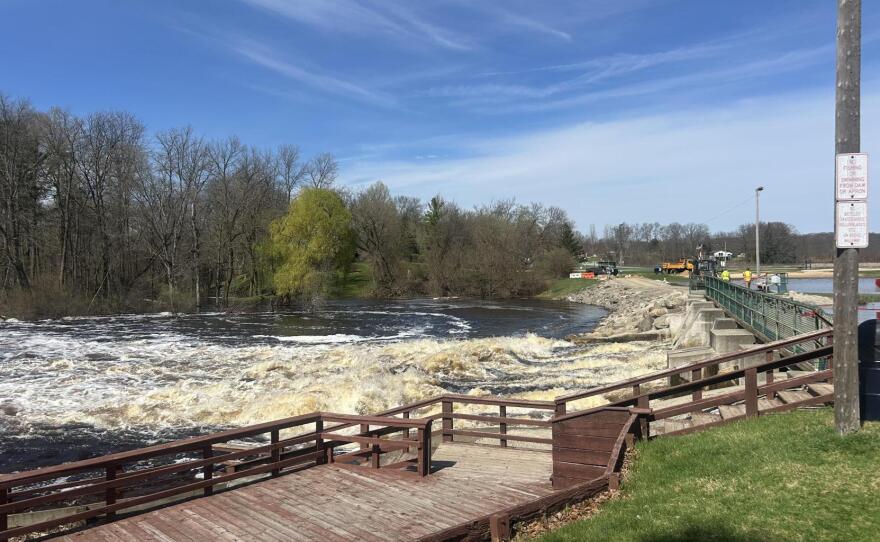
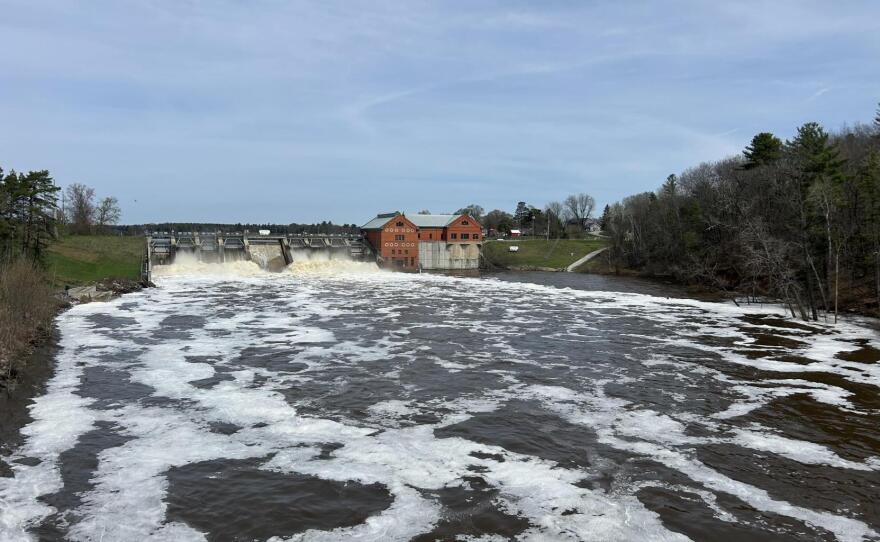
The Department of Natural Resources (DNR), local officials and contracted crew, worked overtime at the Cheboygan Dam to divert tons of water, and got the dam’s privately-owned hydropower plant working after it had been inoperable since 2023. Officials are still working to lower water levels at the dam.

Community members criticized the DNR, saying they could have prevented the crisis. Rich Hill, an incident commander with the DNR said there was only so much they could do with the hydro plant being privately owned.
“We were pulling the maximum capacity that we had the ability to pull going back to October,” Hill said. “We've been doing everything we could.”
During a press conference in Cheboygan earlier this month, Gov. Gretchen Whitmer said the state needs to make infrastructure changes regardless of complications private ownerships of dam may cause.
“As we watch this historic weather change happen before our very eyes,” Whitmer said. “It’s more important than ever that we rebuild and modernize infrastructure to meet the needs that we are currently confronting.”
In 2021, legislation was drafted that addressed the Michigan Dam Safety Task Force’s recommendations. That bill may have helped hold Cheboygan Dam situation this year, but it never made it out of committee.


In January, State Representative Bill G. Schutte, R-Midland, introduced House Bill 5485 , which aims to update dam regulations, hold dam owners more accountable, create new funding and adapt design standards to help dams withstand climate change.
“I introduced this legislation so we can codify and implement lessons learned following the catastrophic dam failure in my district in 2020,” Schuette told WCMU in a written statement.
The bill was widely praised during a committee hearing on Wednesday, April 29. But some law makers questioned how the state will pay for the proposed dam repair grant and emergency funding.
"How is this not just another unfunded mandate to our locals, to our counties, to our landowners?" Republican Representative Jennifer Wortz asked. "I again have serious concerns about the cost to do this."
Schuette responded, saying lawmakers will have to appropriate funding and resources towards the state's dam safety program once the bill is passed.
Moving Forward
Since 2021, Trumble said the state was able to implement several of the task forces’ recommendations by making dam safety a stand-alone unit with separate staffing from the hydrologic unit. The Department of Environment, Great Lakes and Energy has also started assessing levels of risks that dams pose to show which ones need urgent attention.
Trumble said many of the other recommendations required change in Michigan law.
“Certain dam safety requirements like inspection frequency for dams, spillway capacity for high and significant hazard dams, things like that,” Trumble said. “Those would require statutory reform, so those have not been completed.”
Trumble says he hopes House bill 5485 will pass to help “make strides to having overall safer dams in the state.”
Before this year’s flooding, 160 dams were considered in poor or unsatisfactory condition, according to Michigan’s dam inventory, and a recent report from the Association of State Dam Safety officials, estimated that Michigan’s dams need $1 billion dollars in repairs.
In addition to that, dams impacted by flooding may need further restoration. Trumble said EGLE will determine that once water levels return to normal. Earlier this week, federal regulators also ordered all dams that reached dangerous levels during flooding be inspected.
Those major infrastructure repairs can be costly – and that responsibility falls on dam owners.
Trumble says problems arise when dam owners are unable or unwilling to pay the price.

"The state can step in and issue orders,” Trumble said. “But we have limited resources to be able to do so.”
With limited grant funding, Trumble said the cost of dam repairs can fall on communities.
A special assessment district was issued to homeowners in Midland and Gladwin counties to raise money to fix the Secord, Smallville, Sanford and Edenville dams after the 2020 dam break.
Antrim County’s Public Information Officer Janet Koch told WCMU the village of Bellaire received some grant funding to help design repairs for their 100-year-old dam that reached record high water levels this month, but they need more funding to cover construction.
“The only real solution is the special assessment district,” Koch said.


