

Editor's note: This story was produced for the ear and designed to be heard. If you're able, WCMU encourages you to listen to the audio version of this story by clicking the LISTEN button above.
Saginaw is the only city in America with a hard limit on how much money it can take in from annual property taxes. It’s been that way since 1979.
Over the decades, city officials say they’ve had to pull back some of its services, including efforts to proactively maintenance the 80,000 trees growing within city limits.
Despite its history as a lumber capital, former Saginaw Mayor Floyd Kloc says the city’s urban forest has been declining for years.
“Saginaw does not have the well-trimmed view, in my opinion, like it used to have,” Kloc told WCMU. “It isn't terrible, but it's just not that exceptional urban forest.”
According to Kloc, the city used to have a forestry department that handled beautification and public safety efforts within its sprawling urban forest. That was before Saginaw downsized its staff due to tax-cap related budget constraints. Kloc is one of many people now advocating for the cap’s removal in order to revitalize various city services.
Instead of a forestry department, the city’s trees are managed by its public service division. Every year, they pull funds to maintain the trees from a 12-million-dollar state allocation that is meant to take care of Saginaw’s roads. Officials estimate about $150,000-$200,000 of that is put toward tree service every year.
Phil Karwat, Saginaw’s director of Public Services, says his department has been working through a work-order backlog of around 250 tree related complaints since the Covid-19 pandemic. They’re looking to contract some of the work out just to get caught up.
"This will be the first time that I'm aware of in my 27 years that we ever contracted out any assistance with trees,” Karwat said. “But, my streets crews are, you know, we're understaffed and overworked.”
Karwat and other officials described the tree service the city provides as reactive, meaning they only intervene when a tree is threatening public safety. Their capabilities are too limited to routinely trim trees or conduct pest treatments.

Travis Hare, Karwat’s deputy, says regardless of what happens with the taxcap, the city must keep up with the backlog while simultaneously caring for growing amounts of aging trees.
“We have to do our jobs,” Hare said. “We have to maintain them. We just have to get creative in how we do it. Public services isn't allowed to fail.”
Asia Dowtin is a Michigan State University professor who specializes in urban forestry. She says when tree services are limited to only reactionary efforts, such as removing debris from a storm, locals take notice.
“That ultimately can result in public distrust in trees and public distrust in the government that they believe is supposed to manage those trees,” Dowtin said.
Dowtin said trees offer numerous environmental benefits to urban communities, including regulating climates and combatting air pollution. They also help make cities more attractive to visitors.
“If you have a community that has a central business district, it is much more likely that people will spend more time in that central business district if there are trees present than if there is not,” Dowtin said.
While the city of Saginaw struggles to maintain its urban forest, the same isn’t true of its neighbors.
Each of the tri-cities holds a Tree City USA designation from the Arbor Day Foundation, a testament to the trees found in each community. The national recognition “helps communities demonstrate and promote their commitment to a greener place to call home.”
Despite that common denominator, the municipalities’ forestry efforts couldn’t be more different. Midland and Bay City, despite having smaller urban forests, have more robust services officials describe as primarily proactive.
The city of Midland employs five full-time municipal arborists. Armed with a bucket truck, an industrial woodchipper and an array of trimming tools, they spend their days caring for trees within city parks and out lawns. They routinely raise canopies, inspect tree health and remove safety risks.

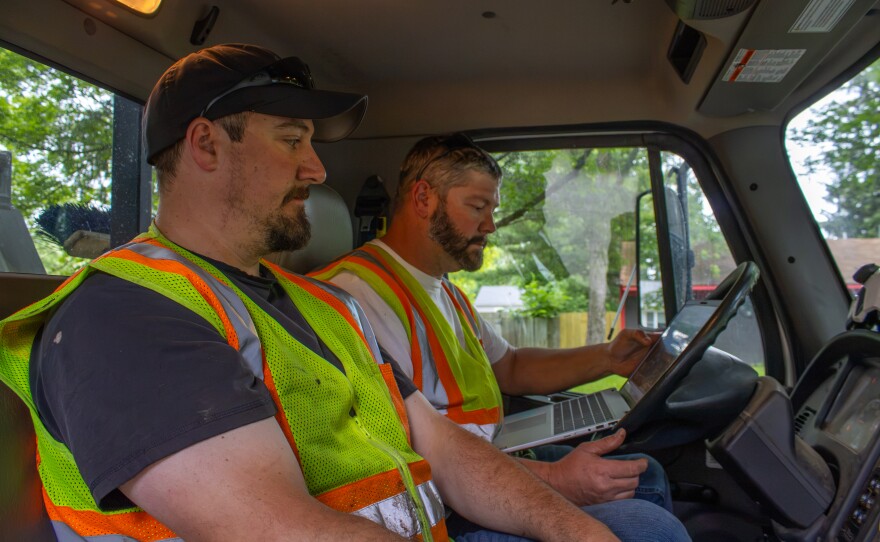

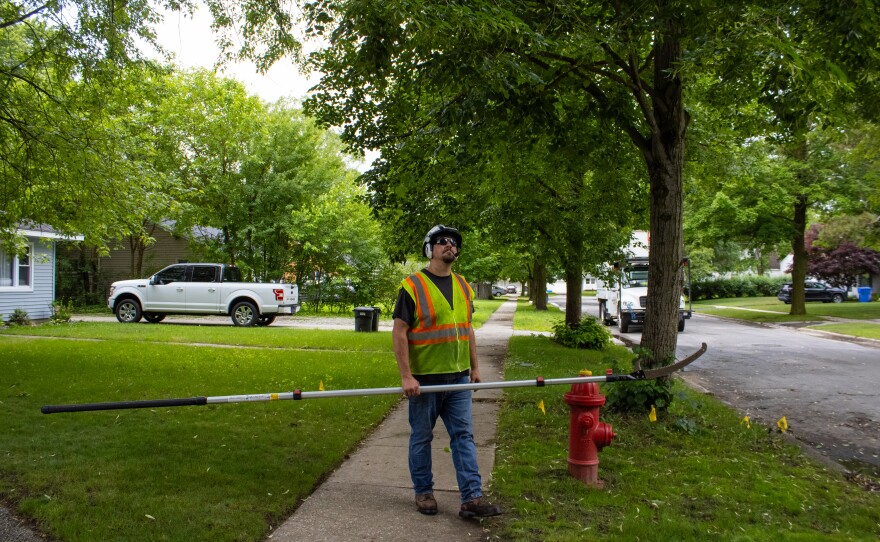
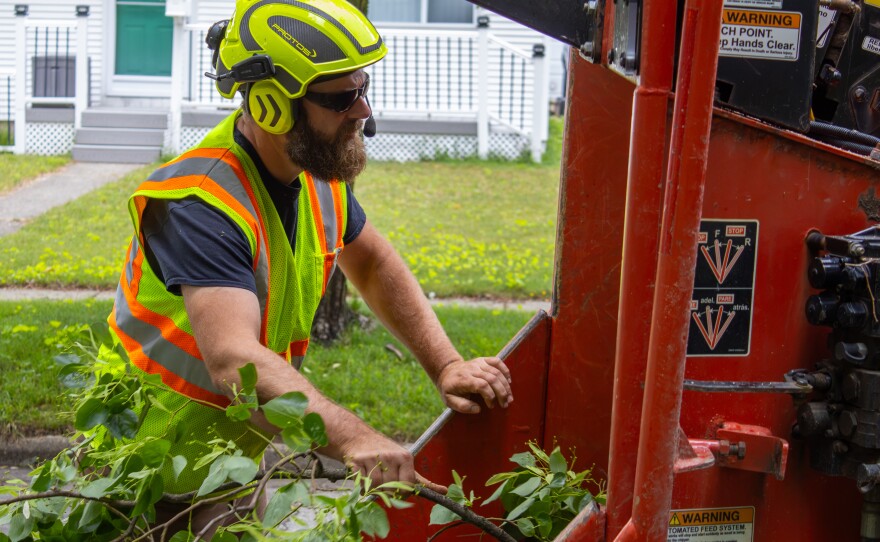

Marcie Post, the city’s parks and recreation director, says her department cares for 40,000 trees. That’s half the size of Saginaw's urban forest, but the city spends about 5-times as much money—around $1.5 million annually—to maintain it.
“They're just so important to us,” Post said. “I feel pretty lucky to be in a community that has residents that do value the benefit of a tree.”
In addition, the arborists also help first responders by participating in climbing rescue workshops and sometimes assist in live emergencies.
Midland recently developed a tree inventory system backed by artificial intelligence, which Post says will help them plan for future forestry needs.
According to Dowtin, Midland is the first and only city in Michigan to do so.
“It's like a gold mine in all the positive ways,” Dowtin said. “It gives them the best, most accurate, up-to-date understanding of what trees are in their community.”
Over in Bay City, there’s only about 20,000 trees, which are typically cared for with a half million-dollar budget.

Adam Webster, who oversees the city department in charge of tree management, said in the last few years, the city has implemented a system residents can use to request a tree be removed or planted.
“That goes back to how we value our canopy here in the community,” Webster said.
People can even choose the kind of tree they want based on size, foliage color and whether or not it produces anything. Around 100-150 trees are planted using this system every year.
Saginaw has put the cap’s removal on the ballot seven times since it was first implemented. Each time, voters struck it down.
But, Karwat says the city has too many other areas of need for trees to be at the forefront. Even if voters take out the cap, he says they’ll likely still be in the same situation.
“Would the city manager and the city council designate those funds to go to streets for trees?” Karwat said. “Probably not.”
The city’s eighth attempt to remove the tax cap will appear on the upcoming November ballot despite historical lack of support from voters.


