

Below is the transcript of our conversation with Drs. Joshua Nosanchuck and Tina Thompson
David Nicholas:
I'm David Nicholas and this is Central Focus, a weekly look at research activity and innovative work from Central Michigan University students and faculty.
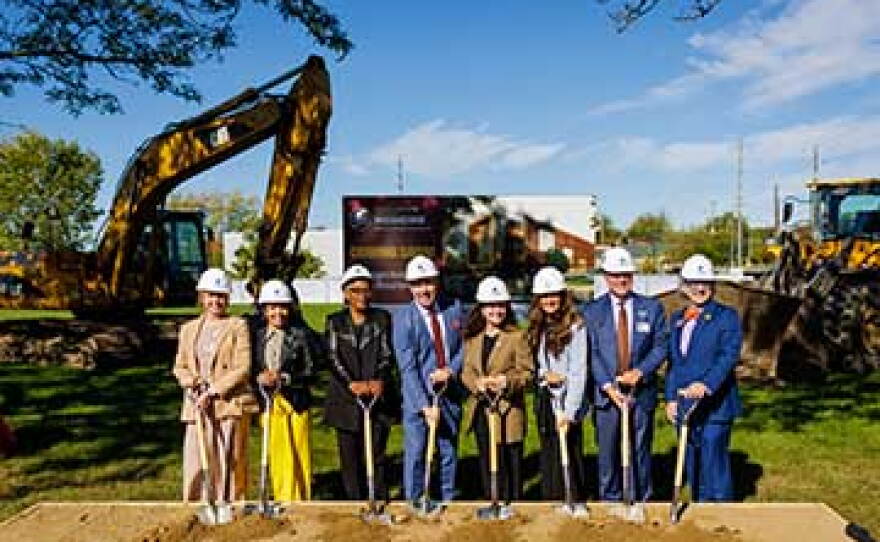
Breaking ground and building up, a major step in medical education at CMU. Grants from both Covenant Healthcare and MyMichigan Health will fund the new Covenant Healthcare College of Medicine at Central Michigan University. The new facility will be under construction through 2028. The plan is for the first students to start their coursework that fall. I welcomed Dr. Joshua Nosenchuk, newly appointed dean of the College of Medicine, and Dr. Tina Thompson, senior associate dean. She also had served as interim dean since May…
What advantages would you point to as the work begins on the new project? Proximity for the students, new innovations, what can we expect?
Tina Thompson:
I'm happy to take that question. So, what we can expect is increased student interaction. So our M1 and our M2 students will be in close proximity to our M3s and M4s. And what most people don't appreciate is that close association across the classes is very important. They pass on information that they've gleaned in their experiences. They provide tutoring for the students. They help them navigate once they get to the hospitals. They also help them develop research projects and research mentors. So, all of that is going to be so much easier when all four classes are based in Saginaw.
DN:
What then for the plans for the existing buildings that have been on campus here in Mount Pleasant, the role and how the facilities here will be utilized?
Joshua Nosanchuck:
What I really want to emphasize is that year one, two of the medical education program is moving to Saginaw, but we still have a large presence here. So, we have population health researchers. We have a large number of basic science researchers doing neuroscience. doing microbiology, doing cancer biology, pharmacology, and more, those are all staying!
DN:
Prior to all this, Dr. Thompson, during your time as interim dean, there was much discussion, announcements, developing and growing nursing program. What we have, what we're going to build, and all roads in between?
TT:
Okay, so the nursing program is in the College of Health Professions. And so, their dean, Dean Simpson, working along with the provost and the dean of the College of Medicine, will probably be working together to figure out how best to grow that program and then where it would be located.
JN:
So, I'll chime in and say that we're really looking at where we can interdigitate with our other colleges. And Dean Simpson is a great example with the Rural Health Center that we're building out They are a very important partner in that effort. They are doing great population health epidemiology work. We're trying to make 1 + 1 equal 3. I know that's hard for some of you math folks out there, but that's really what we're looking to do. And I'm also talking to folks in other colleges in terms of if they are looking to do innovations that maybe the folks in our business school can have a challenge and they can work out cases and come up with product that our partners may or may not be able to utilize.
DN:
With now this new construction that will be underway, has it revised or can you summarize what now you would see as a five-year or a 10-year vision plan for the College of Medicine?
JN:
Our hope is that in five years, our class size will be larger, possibly developing new pathways for rural health so we can have more students staying in our area in Michigan up through the Thumb and Upper Peninsula. We actually have a very high retention rate for people going into residency in Michigan and staying in Michigan. And that's what we would love to see. We would love to see our residencies grow, more of our medical students go into those residencies and then stay on and populate across the state in terms of providing holistic, compassionate care.
DN:
Doctors, collectively, thank you so much for taking the time to talk with us. And again, congratulations. And certainly, on behalf of all of us, all the best moving forward!
TT:
Thank you. I really appreciate it.
JN:
Thank you. And I have to add that it's not just the College of Medicine. It's the president and the provost and the board of trustees and our donors and the people of Saginaw and the people of Mount Pleasant and all of the central and other parts of Michigan where our students are working that will make this a success moving forward.

